Tennessee Cotton Producers Record Second Consecutive Low-profit Year
Feb 24, 2026
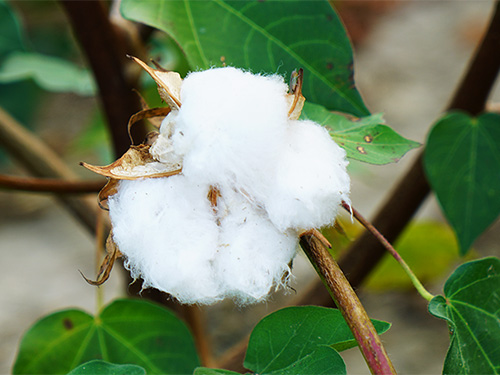
In 2024, severe rainfall in May disrupted crop planting, resulting in an almost one-third decline in Tennessee cotton acres. While producers were hopeful for improved conditions in 2025, a combination of drought and unstable markets led to a second consecutive low-profit year for the state’s cotton industry.
“The weather in 2025 just set the crop up for failure,” says Tyson Raper, cotton and small grains Extension specialist. “May and June were very wet, which caused the plants to grow shallow roots. Then, July and August saw little to no rainfall in West Tennessee. We lost between 200 and 400 pounds per acre in many areas.”
On average, Tennessee farmers grow two bales of cotton per acre, approximately 1,000 pounds. In 2025, the state average dropped to only 860 pounds per acre, at or even below the break-even margin for most growers. International tariffs are further impacting the industry, altering pricing and global demand for American cotton.
“In a typical year, as much as 80% of cotton produced in the U.S. is exported, often arriving in China and other countries for textile production,” says Andrew Muhammad, professor in the Department of Agricultural and Resource Economics and Blasingame Chair of Excellence in Agricultural Policy. “However, Brazil recently surpassed the U.S. as the world’s top cotton exporter, threatening this industry that generated almost $1.1 billion in export revenue for Tennessee in 2022.”
As a result of unstable markets, Tennessee producers are looking to diversify their farm operations, potentially even excluding cotton in 2026. Scott Farmer, row-crop producer from Stanton, Tennessee, recently sold his cotton picker and will instead grow more grains and other crops.
“We used to farm around 2,000 acres of cotton per year, but we would have to grow 1,150 to 1,200 pounds of cotton per acre just to break even,” says Farmer. “With our fields only 20% irrigated, unpredictable weather conditions, and rising input costs have simply made it unfeasible to grow cotton at this time.”
Raper says there are approximately 18 cotton gins in Tennessee, and there is uncertainty whether the amount of cotton produced will support them all. “Farmer is not alone. It is one thing to have to rebuy a cotton picker, but if these gins close, reopening them will be very difficult. Without gins, the state's cotton industry would not be sustainable. University of Tennessee Extension is working to assist producers with agronomic and financial management, helping them optimize their farm operations moving forward.”
Economists within the Department of Agricultural and Resource Economics predict that as many as 30% of Tennessee farm operations are under severe financial stress going into 2026. UT Extension’s MANAGE program provides one-on-one farm management assistance to help producers evaluate their individual situation and improve quality of life. For more information on how to participate, please visit farmmanagement.tennessee.edu/the-manage-program.
For questions on cotton production in your area, contact your local county Extension office.
“The weather in 2025 just set the crop up for failure,” says Tyson Raper, cotton and small grains Extension specialist. “May and June were very wet, which caused the plants to grow shallow roots. Then, July and August saw little to no rainfall in West Tennessee. We lost between 200 and 400 pounds per acre in many areas.”
On average, Tennessee farmers grow two bales of cotton per acre, approximately 1,000 pounds. In 2025, the state average dropped to only 860 pounds per acre, at or even below the break-even margin for most growers. International tariffs are further impacting the industry, altering pricing and global demand for American cotton.
“In a typical year, as much as 80% of cotton produced in the U.S. is exported, often arriving in China and other countries for textile production,” says Andrew Muhammad, professor in the Department of Agricultural and Resource Economics and Blasingame Chair of Excellence in Agricultural Policy. “However, Brazil recently surpassed the U.S. as the world’s top cotton exporter, threatening this industry that generated almost $1.1 billion in export revenue for Tennessee in 2022.”
As a result of unstable markets, Tennessee producers are looking to diversify their farm operations, potentially even excluding cotton in 2026. Scott Farmer, row-crop producer from Stanton, Tennessee, recently sold his cotton picker and will instead grow more grains and other crops.
“We used to farm around 2,000 acres of cotton per year, but we would have to grow 1,150 to 1,200 pounds of cotton per acre just to break even,” says Farmer. “With our fields only 20% irrigated, unpredictable weather conditions, and rising input costs have simply made it unfeasible to grow cotton at this time.”
Raper says there are approximately 18 cotton gins in Tennessee, and there is uncertainty whether the amount of cotton produced will support them all. “Farmer is not alone. It is one thing to have to rebuy a cotton picker, but if these gins close, reopening them will be very difficult. Without gins, the state's cotton industry would not be sustainable. University of Tennessee Extension is working to assist producers with agronomic and financial management, helping them optimize their farm operations moving forward.”
Economists within the Department of Agricultural and Resource Economics predict that as many as 30% of Tennessee farm operations are under severe financial stress going into 2026. UT Extension’s MANAGE program provides one-on-one farm management assistance to help producers evaluate their individual situation and improve quality of life. For more information on how to participate, please visit farmmanagement.tennessee.edu/the-manage-program.
For questions on cotton production in your area, contact your local county Extension office.